Thursday, November 27, 2025

Crypocurrency is a share of the Extrinsic value of the future economy

Alot of people say Cryptocurrency has no intrinsic value, and that much is true, but I don't even think shares of any company themselves have intrinsic value*. (short version, they are a container for intrinsic value that those calling themselves intrinsic/value investors are betting on the extrinsic extraction of. Those calling it anything else have fallen for the substitution heuristic.) You are at the mercy of hoping someone else cares about this illusory "intrinsic value".  The only real intrinsic value is the dividend and that can be taken away or cut. "Is this intrinsic value in the room with us"? Intrinsic value is a mass delusion, that doesn't mean it is any less valuable, due to extrinsic extraction from its underlying intrinsic value that the company itself holds, just be aware that there is a difference.

Crypto currency similarly has a massive extrinsic extraction play. Most people buy based on “intrinsic value” because what they are really buying is an extrinsic extraction of the company. Well, you can buy cryptocurrency for an extrinsic extraction it’s just different. It too is a container for potential intrinsic value through the arbitrage function. It has a relationship with AI because miners can convert to AI datacenters. Crypocurrency has a required electricity cost to create new supply and thus has a value in energy which can also be measured in intelligence. It is rooted in real measurable deliverable value supported by the entire economy. This creates an arbitrage opportunity for anyone smart enough to figure out how. Unlike a dividend paying company, this arbitrage isn’t guaranteed. But similar to shareholders of a company with intrinsic value, there is a function that other participants in the purchasing of GPUs to extract value can do so in a way that regulates its supply and value relative to energy, intelligence, and GPUs, and that through robotics will be rooted in real economic productive capacity if they succeed.

Bitcoin is the ultimate extrinsic value extraction play on the entire economy. Certainly that makes it more speculative as an asset. But consider this argument the next time someone says bitcoin has no intrinsic value.

You can either issue debt and sell treasuries and buy GPUs and mine bitcoin, or you can sell bitcoin and repurpose the GPUs to farm intelligence and sell it to cloud services for other large AI companies who willpay for compute to create and provide intelligence. While that value may be rooted more in whatever the last person paid, the decision to mine it is still regulated by the value relative to GPUs and now relative to what it would pay to convert to intelligence farming. If intelligence farming pays more the GPUs that mine bitcoin will be sold for those optimized to farm intelligence and then the price gets better relative to bitcoin to buy the GPUs and the payoff date shortens and those tracking the correlation between bitcoin and AI stocks and data centers bid up the price through statistical trading pair methods to arbitrage and play the convergence and divergence of the asset pairs,

Bitcoin with it's limited supply, becomes harder to mine and requires more intelligence/energy units to access. But the value is in what the intelligence represents in terms of converrting to economic output. If you believe that AI will unlock production, bitcoin should track with this extrinsic value explosion. If you believe it's all overhyped and will never translate to the real world? Then you probably want to buy treasuries and short AI and crypto.

I am not yet sure why quantum tracks with bitcoin other than there's a long shot future potential for it to become something valuable in terms of AI and cryptocurency mining output, and that the more a sportscar is sold, the more insurance is sold so quantum as an insurance vehicle to bitcoin disruption might make some sense as quantum decryption threatens bitcoin's security. But that doesn't explain why correlation is so tight. If I figure it out I'll blog about it. Probably the participants in the market see a much more clear path for quantum to be interlinked with AI and cryptocurrency because based on price action quantum seems to behave almost like an ultra leveraged AI/bitcoin play.

Ethereum represents more of the expansion of blockchain and web3 and any altcoin market and the ability to create Defi and anything else on the blockchain itself, and it tracks with bitcoin but not onthe same pulse or timelength, it matches participants who have a different risk appetite and it has a relationship with an ecosystem relating to crypto, but bitcoin has a much cleaner 1:1 arbitrage tie with GPU/intelligence farming and its value can be thought of as a measurement of intelligence that represents more and more intelligence as mining new bitcoin becomes more difficult or a share of energy in the world as bitcoin represents more and more energy. Ethereum has more utility as a currency in accessing decentralized finance and a lot of other things in the crypto world where bitcoin is a more common share in various treasuries. Either one could be arbitraged.

Coinbase and Google and Shopify and OpenAI and Etsy and others are making deals with AI platforms. Soon you will send cryptocurrency to a wallet that an agentic AI can access and then it can run your Shopify or Etsy store for you with that money and buy and sell as needed to do so, or it can purchase consumer items for you once you give it your approval. That means AI has carved out a niche in the economy and cryptocurrency is the doorway to participate. Even though it is likely they will use stablecoin. Stablecoin use basically onboards people into a cryptocurrency ecosystem where they are likely to first purchase cryptocurrency to convert it or are more likely to convert stablecoin to cryptocurrency once they accumulate a surplus of cash and want to turn it into a performing asset.

And ultimately bitcoin translates into output of the economy in real intrinsic value if the AI revolution is successful with agentic operations and AI proliferation throughout the economy yielding real profits feeding into AI datacenter expansion and being arbitraged through cryptocurrency mining and the trading correlation. More datacenters convert to AI, more crypto scarcity and higher yield on the GPUs oriented to bitcoin mining rather than AI in the shorter term. Longer term maybe the demand erodes and output of bitcoin optimized GPUs declines, if the correlation ever breaks. And those tracking such things also will flood in and buy the short term price divergence playing for a convergence back to stronger correlation.

The old economy on a different pulse less efficiently did a similar thing with the more intrinsic side of the economy. Banks lend if you have intrinsic value or a probable path to intrinsic value with intrinsic value as collateral. Also, it tracked with the banking function, the industrialization that produced the military and the military which secured the value of the dollar and the selling of war bonds. The ecosystem all works together to reinforce the banking function which is in turn secured by the public debt and bailouts and governance secured by the military-industrial complex.

The old economy creates dollars as a byproduct of the bond market and the bond market is a representative share of the rest of the economy through debt expansion to produce income. The dollar is a diminishing claim on income due to the mechanism to inflate debt with the economy. Whereas the entire economy and “risk asset” is measured against the bond market or “the risk free rate of treasury bonds” by  assigning a risk multiple and predicting future cashflows, or some iteration of, and comparing them to treasuries. Investors may instead read the tealeaves of other investors using technical charts or reading sentiment and behavior to exploit the emotional inefficiencies or making intrinsic decisions or in those making expected value calculation of potential moonshots for extrinsic potential to add a premium for transformational and disruptive companies rather than seeking robust intrinsic ones. Or playing the cyclical tendencies of economic projections and playing the sentiment of earning projections, policy makers, federal reserve, interest rates, macro, etc. But it's all sort of rooted loosely to the currency market and debt market and banking function.

Bonds are a kind of claim on intrinsic value of the economy. They represent the banking functions which only make loans if they believe their is a return and is only taken by those who believe their is a return. Bondholders get paid before equity holders. Banks issue debt and buy bonds and they do that based on the economic security of asset collateral and they use public debt as collateral. And they can layer their leverage to make a spread and leverage up their return on collateral and get bailed out by public debt when they are too big to fail. a tremendous amount of money can be made borrowing at 3% and lending at 6% due to the leverage and collateral they can foreclose on. But the debt is an indirect access where the intrinsic health of the economy drives its existance. And the dollar is diluted over time.

Bitcoin is not diluted beyond a certain, perpetually diminishing point.

In a sense banks rob from holders of dollars through inflation by leveraging the same deposit 10 times and acquiring vast amounts of bonds that are created while issuing dollars as the byproduct inflating away savers value.

If a bank takes $10k and pays you 5% or $500 but takes the $10k and borrows $100k at a 3% spread they are making $3000 and paying you $500. Or 600% on your money. But they're probably paying you a lot less and leveraging up a lot more. And they do have a lot of costs of employees and buildings and marketing. The banks access most of the intrinsic value creation of the economy.

Bitcoin is instead a claim on the extrinsic production of the AI and robotics economy and disruption of the old economy.

But with bitcoin, the nations dilute and the supply that will ever be minted is finite which everyone knows. But what they haven't fully appreciated is that bitcoin is a claim to intelligence or energy, whichever is valued at more and it's a claim on an increasing amount of it and it is absorbing the exploosion of intelligence and the net output that intelligence can yield feeds back into growing intelligence and increasing bitcoins value and growing the economy. Bitcoin is like the bond market for artificial intelligence. And GPUs are the current facillitator of the growth in intelligence. and those buying and using GPUs are producing a yield measured in bitcoin, bypassing the need for the dollar economy.


A lot of people have been passing around a graphic showing how NVDA and AI platforms are growing based on using each other to build out AI infrastructure as if that makes it a bubble when the banking function does the same thing with the bond market, the federal reserve and the banks. Both are printing their own money to serve an economy. An alternative interpretation of the same facts is that tech has found a way to capture the global economy through AI. That they have created their own banking function. That they soon won’t need the dollar to participate.


It’s the same picture. It’s how economies work. GPUs are the new bond issued by NVDA, the new federal reserve. And bitcoin is the new non inflated dollar gold standard banking function. The bitcoin is not digital gold, but it is a digital gold standard anchored to AI productivity and GPU expansion. Calling NVdA the new federal reserve is a slight exaggeration here, they’re still using dollars to go into debt to expand this buildout. But they are facilitating the new currency. But if you believe AI and robotics can deliver economic output, this is the new ecosystem.

GPUs and electricity costs and the yield of miners and thus the competing function of AI intelligence (as data miners can convert to farm intelligence for AWS and Microsoft and selling to hyperscalers) helps determine how much bitcoin gets made or how much intelligence gets produced and applied to the economy. And at some point robots become a derrivative of this intelligence and intelligence becomes a bit of a bond on robotic output as well…. because like the bond market selling to rates banks that the market demand will accept, so too will intelligence be issued to robots. And energy is a claim on it all, which goes back to bitcoin as a claim on energy.

I hope now it’s clear that although people haven’t learned to think this way and there isn’t a simple reductive substitution heuristic to easily pretend “stock prices have intrinsic value” when in reality they are a container for one that you can apply to bitcoin, I tried several in this post, (bitcoin claim on intelligence, GPUs as a bond, and so on) but they are just not quite accurate enough without the context. People will be slow to catch onto this while those with wealth who understand it will be aggressively accumulating it and measuring it vs GPUs, intelligence, AI, data centers, ETH and for some reason quantum.

Elaborating on the first claim.

*shares of companies have no intrinsic value. You can theoretically unlock intrinsic value if you can buy companies outright, you can price the income stream from the stock shares if they pay a dividend. You can have an implied intrinisic value if you expect the economics to pay a dividend and assume there is enough extrinsic value in the overall economy to enforce your legal rights. But they only have that intrinsic value IF you presuppose that certain institutions exist to protect their conversion into value… or if you have enough influence such as owning the whole company to direct the company itself. Many of this is only possible due to civilization extrinsic shifts away from hunt or be hunted, away from fending for one's life, towards civilization development of tools, markets, economies, trade, exchanges, governments, laws and legal inforcements and dividend and financial exchanges and requirements and so on that ensures you can collect your dividend or vote it in. None of the alleged “intrinsic value” matters if enough people are hungry any law can be overturned or ignored when societies destabilize… otherwise there is no value of the shares which are only a container of the digital ledger that represents a paper that represents a share that is representative of the company that is secured by everything else. This is why berkshire hathaway can trade down 99% and they can call it a "glitch". because it's ultimately worth $0 intrinsic value in reality but with the support of everything else it can return to its current value because of the enforcement of narrative. Berkshire is just a representation of a company and that company holds shares that are containers for other companies and also has wholly owned companies and revenue also. But they never will pay a dividend according to their own claims, so ultimately the intrinsic value of the shares themselves is an illusion. albeit a grounded, very powerful illusion that will persist for a reason. They are only valued based on what others will give you unless you somehow have enough money to take it private or gain a controlling stake and can vote yourself a dividend. Otherrwise the intrinsic value is really a persistant and powerful illusion that becomes as real as people make it. And everything operates that way except maybe the dividends themselves that are an extrinsic feature of the container called shares.

just be aware it's not as "intrinsic" as you imagine. That doesn't mean it isn't valuable.

Trying to fit bitcoin into a precise value is difficult, but I look at it like this. Bitcoin is a claim on the economy to the degree that people continue to arbitrage the value of energy, GPUs and AI data and bitcoin yield on the same materials, just like how people who claim to be "value investors" are extracting intrinsic value from the container, you are extracting the value from the container known as bitcoin through the arbitrage mechanism that is valued based on the long term intrinsic production of the economy that can be delivered by AI. Since this is an unknown it is an extrinsic vlaim overall. It is a play on the potential for a revenue source, not a mature market with one.

But it is the most explosive extrinsic value creation potential out there tied to the biggest economic revolution we have ever faced.

I believe in the next—call it “25 years” to be safe—that the entire $40T per year labor market will be replaced by robots facilitated by intelligence. And that output may stall 10x or 100x from there. Bitcoin’s current market cap is under $2T. There will only ever approach 21million bitcoin to fit a share of a growing economy. Global GDP is currently $85T per year and that number if AI is successful will expand near $500T per year around 2045 with accelerating GDP growth beyond if Kurzweil is correct.

Friday, November 21, 2025

The infinitely bullish case for Tesla

I have an overall thesis that "extrinsic value" is underpriced.If intrinsic value is the lifetime earnings plus balance sheet of the current dynamics of a company with a specific product, extrinsic represents what it can add to the business if successful with some of its attempts, or how it can convert into another kind of business or how it can grow into other markets outside of its existing ones or how it can lower costs and increase price or in some cases lower cost by more than it lowers price while capturing wider market and scaling production non linearly. Extrinsic represents unlocks. For instance, a "book store" like amazon becoming the "everything store" while lowering their costs through the buildout of infrustructure. Apple going from selling ipods and macintosh to every iteration of the iphone, the app store, the apple tv, and so on.

I have a wildly bullish case on Tesla. Tesla is far overpriced in terms of intrinsic value. The implied extrinsic value that they are paying as a premium over the intrinsic is large. But I think the actual extrinsic value is much larger. Optimus eventually represents hundreds of spinoff companies using Optimus. About $4-6T market cap is created per year in new IPOs. (edit: this is wrong by a lot. Actual IPO value per year is more like $120B). Add a multiple to that. and add economic growth over time and also add a multiple to that if you think robots will magnify the output. Add a multiple to whatever percentage you think Elon with a fleet of optimus robots could capture of that per year in new robotic businesses or services within Tesla. Times whatever multiplier you think Robots will do in output vs the current economy. Then you have like a 40Trillion dollar per year labor market. 

What percentage does optimus capture? Then Optimus, if successful, eventually reduces need for gigafactory capex. Because you don't need to build new factory, plant, and equipment to house machines, you can just have fleets of robots in an open field making the parts or up in space in orbit or on the moon or mars if you want to get wild with your "moonshot"

And then you have overproduction of batteries so what do you do? You start Tesla Drones, get military application (they already have most of the AI and engineering and tech to deliver a payload to a target), get reconnaissance and rescue (lidar and Tesla FSD tech overlap) and they already have production capacity and surplus of battery production since you eventually max out the number of Optimus robots you need. And all the scifi nerds measure civilization by "energy" and Tesla actually can become the largest energy company in the world. 

Part of “type1” is also becoming multiplanetary or highly likely that a type 1 civilization will become multiplanetary en route to a type2 civilization.

According to Nick Cruz Patane Elon said we see a path to put 100gigawatts per year of solar powered sattelites to orbit per year, and said he could put them into the air and network them together and we have a plan mapped out to do it. Tesla isn't just a company with the potential of taking FSD from producing cars that previously made $1500 per car sold to $150,000 by charging $0.50 per mile times 300,000 miles per battery and then replacing it with a more powerful, longerlasting, cheaper battery and repeating the process for a larger return per car...

It also has the potential of having subscriptions for added features, a fleet of optimus robots that can do everything, thereby facilitating the use and demand of its tesla energy division, and the car itself making a sale is a loss leader for powerwalls and solar panel roofs and building out, and the profit share for existing owners turns it into an ongoing forever profit source.

But if it can build robots that build robots that build cars and batteries and solar panels and more, while launching sola energy to space, it becomes the primary accelerator of a Type 1 civilization and on towards type 2 after that.

Tesla is the largest energy company in the world in terms of extrinsic value. And what I see after that?

Drones.

Tesla has an overproduction capacity of batteries one day because eventually you have more optimus robots than necessary. You reach law of diminishing returns. But you still posess battery production potential. So what do you do with them?


Drones.

Elon has connections politically and presumably with NASA there's some meetings with DOD about it. Afterall, the US has a history of covertly acquiring and assembling the Nazi scientists after WW2 to start NASA and you think delivering a payload to a precise target isn't of interest to military? Space X has government contracts, the CIA has declassified documents not only showing their connection to operation paperclip and others, but also were concerned about soviet sabotage of the moon program and they had the space race during the cold war, which hellped reveal intelligence about the soviet missile launch capabilities while upgrading our own. There also was a venture capital fund with CIA backing that was behind Google. 

You don't need to be a conspiracy theorist though, the fact is there is viable potential and connections if needed for drone companies to collect government contracts just like space X does to help finance aggressive expansion for military usage.

The Tesla Drone Division has to get the timing right. If they ramp it up too much too early, i suspect that will diminish their earnings and growth in the Tesla robotics division with optimus and depending on the battery surplus, they may require too many batteries and they'll have to pick and choose how to allocate their batteries. If drones are going to be more profitable than optimus which i doubt, they should start right away and expand it and make money while they wait for technology in robotics to catch up while focusing on ramping up battery production.

The drones could run on solar power and network and transmit energy somewhat efficiently through lasers just as starlink and the earlier reference could. 

The drones could do recon, rescue, identify lithium mines, run on the self driving AI camera and lidar technology to spot rare material topology and identify lithium deposits on earth and using their NASA engineers could also become a weapon or fire a weapon.

But on the moon, drones could identify helium3 which many believe will be used for fusion, which many are saying we will see in our lifetimes, perhaps accelerated by intelligence of AI. 

On Mars, drones could identify water sources and iron ore deposits, or potential building sites for colonization. In other words, this technology is somewhat future proof as long as they can stay on the cutting edge. 

I have an interesting track record of either predicting what Musk is thinking, or perhaps seeding the internet with these ideas until someone proposes the idea and if it makes sense starting from first principles and works economically, Elon will tend to do it. The idea of ride sharing sericce and the suggestion that one day Elon could compete with Amazon is something later echoed by Cathy Wood, but I was also thinking along similar lines and its possible i went first there.

What I do NOT know is how much of a surplus in battery production is there, and can they efficiently "trade" batteries as needed between robots and drones without too much of a cost relative to the bennefit to get drones started. But Tesla Drone and Tesla mars vehicles and moon vehicles is on brand of creating something very cool and using the brand to create inerest and hype rather than advertise.

You add all of this together and the moonshot for Tesla is easily at least 10x higher and it could even be 10x the market cap in income depending on the longevity of the company and the discount rate. You probably could add a multiplier to the growth of the economy if we are about to converge and see multiple overlapping s curves hit their growth phase simultaneously and increasing economic value.

For instance AI could unlock hard problems which in turn increase their ability to solve hard problems. That could unlock economic growth multiplier resulting in more allocation and growth for AI investment.

The Market Is Trying To Take Your Stuff.

When "reading the tape" analyzing charts, etc... You have to realize the market is trying to take your shares, your crypto, your assets, etc. It is trying to exploit your emotions and the emotions of participants. Some people might even use the media to acheive these ends. And therefore most of what you see is not friendly to your wealth.

You can look at overall allocation and defensive trading and just systematically acquire more lower and reduce higher perpetually, and there are many good methods towards doing this and adding debt and leveraging risk adjusted returns into higher returns on equal levels of risk or whatever you'd prefer to have in terms of risk tolerance, or you can go on offense and try to figure out when markets are vulnerable and even picking individual stocks that will benefit the most from your thesis.

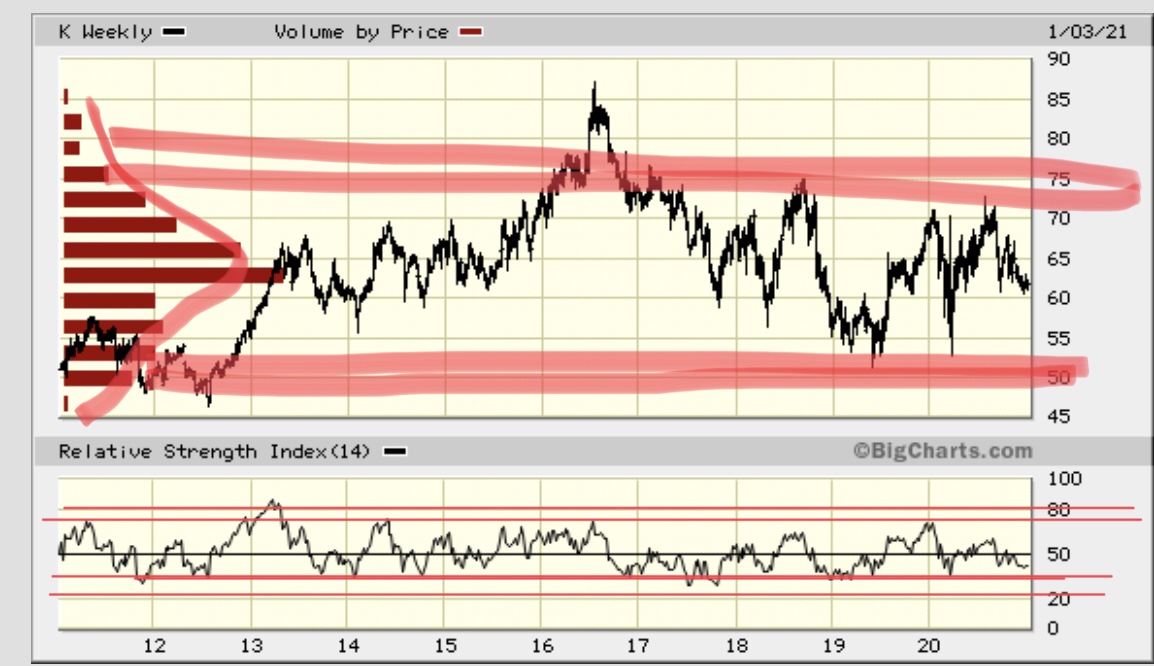
Recently I've mapped psychology and volume profiles to recent price action. The market in April did something interesting, it bled lower on fear until people said "F this" (capitulation). You get better at spotting capitulation and watching the action over time.

In other words they gave up and surrendered their shares at a 20% discount to the high. The market was trying to take their stuff then. It's trying to take your stuff now. It's always trying to take and whenever it is trying to give, be careful. Following that capitulation, markets had a sharp responsiveness and buying and people chased higher. Then they bled lower quietly shaking off the recent weak hands.

All of this was a mechanistic behavior to get your shares.

This action in april in markets, appears to be occurring in cryptocurrencies as a microcosm of what happened in april to markets. Same behavior. capitulation, response, fade. A series of failed captiulation followed by ultimate capitulation. It may be too early to say if this is the real capitulation but the price action look to have blown out in similar fashion or to be close.


ETH


qqq in april vs BTC today


Now what we have is a buyer underneath who buys your capitulation who represents potential support if he defends his prices and the sellers who are without who will likely chase higher because they are reactionary rather than anticipatory traders. Once you can see this trading will make a lot more sense. You can learn the nuances. The smart money normally is doing something different from the crowd. The Graham and Buffet wisdom of being greedy when others are fearful, accumulate when others capitulate creates the floor and then how things respond afterwards tells you if the rest of the participants will respect those price levels or not, or if there is more to come and another capitulation event even lower and a larger whale to swallow by a bigger shark below.

you could go to the hourly chart and also probably see some similarity. over time and cycles you learn to see familiar group psychology and to be less affected by your own emotion and more affected by your experience. You can kind of see the third wave of capitulation was the one that stuck. So far it seems to be the same with crypto here. Time will tell.

You may see a difference in responsiveness, and it isn't a guarentee that just because last time the buyer was right and the seller was wrong that there may not be more pain and what you thought was capitulation could be dwarfed by the volume and emotions reaching greater extremes. But the act of reading the tape is that you are looking for certain clues and similarities mapping behavior, psychology, volume, price and narrative together and cross referencing it with any other sort of clues you can find to support a narrative, or disprove your existing one. And from there you identify where your narrative fails and where you need to adjust and manage risk against.

For example, we also have very bullish traditional calendar seasonality, election year cycle seasonality, and decade seasonality (5th year in a decade) suggesting bullishness ahead. It all culminates together, but if things don't respond, in general, then you can start looking to protect yourself a bit more and lighten up and look to add on the next capitulation wave. I strongly suspect this one will hold. If you want to be the wait for confirmation crowd and draw lines like i did and buy from higher when there is less heat just make sure you do it early enough and can have a big enough return on your risk to make it worth avoiding the heat that buying lower might invite. You have more upside buying from lower, but if you want to get stopped out and shook multiple times entering and exiting you can try that style and see how it works for you. Some people can pull that off.

I personally have been around long enough to notice a pattern in group think where so many people want to bet against the market so early following a significant correction. It reminds me of various years where just following a 2011 correction and previous bear markets how eveyrone wants to play hero and bet against apple and amazon and netflix and tesla. Now they're betting against the stocks that move the most early in the S curves, calling for top in crypto and quantum and AI and palentir. Everybody thinks they're Michael Burry, even Michael Burry (his reputation is bigger than he is) and as one astute commentator put it, "we're in a bubble of people calling for bubbles". Tops just aren't made from this sort of group think. When people call for irrational exhuberance and such like Greenspan in the mid 90s, it is not bearish.

Martin Shkreli is shorting quantum and attracting so many followers who say he's "right" and he is letting people know how they can short Open AI PRE-IPO. That might be like shorting facebook preIPO. Or a bit like Chanos shorting Tesla. Pre Revenue transformational technology companies are not the ones you want to bet against as the extrinsic value has not even developped its case, or some popular bloggers shorting amazon or a guy on CNBC shorting netflix like in the early 2010s. Or people mocking Michael Dell and Steve Jobs for starting in a garage. Or like Buffett passing on apple or amazon only to buy back when it is a mature company with less growth is discounting the extrinsic value of what these companies can become and what the entire global economy can become 20 years from now. And now he's doing that with Google although now you at least know they could be a player in AI. You ask openAI to look for blindspots in a thesis and why someone could be wrong and layer enough questions on it and it will let you know just how large the total addressable market size can be for a theme in general and it could be the worst call of all time if the economy itself undergoes another extrinsic shift.

People are also pointing towards bubble without adjusting for the increase in M1. That might prove like people calling it a bubble priced in zimbabway dollars because it didn't collapse 99% in price. The global bond markets collapsed in the 90s and in the lead up to russian default and east asian default you saw liquidity concerns and a chase into the dollar. Divide most moves by 5 or 10 and measure the total % allocation of global wealth and the global bond market is still closer to a bubble than stocks. What if everyone was to become trillionaires, where would they put their money if not stocks even at absurd valuations and low yields? Why isn't the shiller PE not going to make higher and higher lows and higher and higher highs over time? and if so, where does it stop? Why not 100 where stocks yield 1% but also gain from the debasement of cash and acceleration of overall growth? I wouldn't be as bullish at 100, but at 40 in an uptrend during a convergence of multiple S curves and transformational technologies with bearish sentiment following capitulation and global debt to gdp at 300? I'm not putting my money in bonds. There are still going to be people flooding away from risky bonds after defaults of countries that I can sell to, there are still demographic shifts and capital changing hands that results in reallocation of capital that I can sell to.

And look at demographics. The Millennials are expected to see a 5 fold increase in wealth in the next 5-10 years from inheritance and coming into positions of jobs as genx retirement age approaches and as the last of the young boomers late retiring. And they're allocating towards crypto, real estate and growth stocks at much greater allocations than boomers and gen x. You can front run this capital. based on market size vs wealth you could see a 17% per year increase in bitcoin over multiple decades just to get asset allocation consistent with the millennial demand not even including any crowding and network effect and sentiment shifts towards enthusiastic extremes or global allocation shifts. That does assume their preferences remain constant and some other stuff that may not be true but the peak demand (bubble) would be higher and would be driven by enthusiasm. That doesn't even get to the gen Z capital and assumes baby boomers and wallstreet won't eventually participate more than 3% or whatever. You still have the brexit/pigs bond default like event and credit downgrades like in 2011 or the russian defaults and east Asian bond defaults like the 90s that will flood some more capital into growth. If you're playing defense and willing to lay off for 6 years like Buffett in 1994 and you want to buy some no-tech insurance companies and defensive names and wait it out while underperforming. Respect. Disagree, but with the approach for the environment, but respect. If i had a time machine and wasn't sure about the exact year but recognized that I was probably in the 1990s, I'm not freaking out and buying bonds and raising cash after a capitulatory decline, pop and fade. I'm going to the transformational tech and their associates. The new era PCs and hardware and software and dot coms. If you teleport me and I think i'm in the early 2010s and I'm not sure what year, I'm not sitting in energy plays and utilities and bonds and consumer defensive waiting for covid to hit following a decline and return. I'm looking at smartphones and associates and new wave crypto and associates like ETH and others. You put me in today I'm looking at the new wave tech and associates.

If I see things a little enthusiastic, from high prices and the market is underneath and coming up against that support and bulk of volume is underwater and the narrative is played out and now everyone is talking about buying the dip and everyone is saying how acting like Buffett and value investors are idiots and then I might play the defense type names. If you say "even if you bought the peak of apple in 2000 or 2007 or the peak of coca cola in 1929 how you'd be up a lot 20 years later and you choose to identify the quality companies with ability to innovate and growth prospects at any price. Respect. Disagree with the approach, but respect. if I had a time machine and wasn't sure but recognized I was probably in some time in 99 or 2000 or 2006 or 2007 or 1927-1929 and prices were at all time highs, I'm getting defensive, paying off debt and margin, rotating to defensive sectors, looking for gold or energy or oil or bonds or whatever, etc.

Now I'm not saying it's the late 70s or mid 80s because that was probably more 2009 or 2015, but if you look at growth nasdaq vs dow or small caps we are only just breaking out, so maybe things are more 1987 post crash. or 1992 at new highs. and things aren't properly valued by prior methods due to the extrinsic shift and currency debasement and future debasement that will occur that isn't priced in. you divide any valuation by 5 or by 10 because we are in post gold standard era and pre-government globally acquiring all the equities era and willing to pay higher for all sorts of reasons. and suddenly you have to question everything. And if so... how much of a runway do we really have if AI is in its infancy, if robotic wage slavery with us taxing 80% of robotic output or directly acquiring the equity/tokenized valuation is the eventual plan to pay for things and lower the economic strain, regulation, taxes, etc on everything else and increase the stimulus or equity buying everywhere else proportionally to the money raised or even multiples more using additional debt/equity increases and additional debasement.

If 1981 was more like 2017 when inflation adjusted the nasdaq finally toook out its high and 2025 is only just when nasdaq to dow is taking out its high and the russel is working on its total price high now and that is more like 8 years later and 1989...or 1991 or 1992 had some small volatility that wasn't the 1987 or prior concerns but was enough... 

What if growth is ultimately going to outperform value for the long run as I think it should and we have not yet made that extrinsic shift? I think human history is one extrinsic shift after another with the occasional intrinsic counter trend. If we didn't, shares wouldn't hold any value at all. It is only because of the development of markets, economies, legal systems, governance, structures, banking institutions and so on that can enforce the idea that shares represent the underlying. If they fail to represent their underlying, there isn't intrinsic value. Shares are just a container for what Buffett bets on because of the extrinsic shift. Buffett and value guys will thrive from the intrinsic counter cyclical shift and being well enough capitalized to participate in extrinsic expansion, and has bennefitted from the 1958-1970s secular bear where they could be agile and pick off neglected value, from their own extrinsic shift towards quality (lifetime earnings) and away from cigar butts (liquidation value) under Munger after 1978 and from the "lost decade" when Buffett failed to make the next extrinsic shift towards tech and crypto and unicorns and decacorns and disruptive innovation and growth, but he and Abel did participate in Amazon and Apple after they made an enormous run so he made a slight extrinsic shift towards tech which he never would have done in the past, and now perhaps their participation in Google represents a recognition of extrinsic potential.

The 2000 top growth only just inched ahead. Growth may still be badly underpriced if we continuously make extrinsic shifts. Growth obviously lagged behind terribly in the 70s and has yet to catch up despite it outperforming in more recent time frame measurements if you pick different starting points. Although some of it may be masked by the private equity unicorns and decacorns and the ability for the market to take private the companies before they undergo their growth, and IPO them at more absurd valuations once the growth begins materializing.


...Some of this depends on starting point and what you are measuring.


And so you could conclude value is on sale and growth is overpriced if you look at the wrong starting point. But I think growth has badly lagged and is catching up and value is lagging and will continue to lag but value is still overpriced on the longer term scale. If so, you will see growth at least come into parity with value if not surpass it and never look back.

Afterall the human condition if nothing else finds way to do more and more with less and less in perpetuity. why would any historic calculation based on a past that no longer exists be any anchor to the present if the broader longer term trend is to eventually to everything with nothing? Is there any reason we return to the stone age? If we avoid destroying ourselves and we escape the risks of an asteroid I don't see anything limiting our expansion beyond earth and to mine asteroids and build in space where growth potential is unlimited and the money supply certainly is not limited and accelerating acceleration is certainly possible (Kurzweil singularity). If everyone ascribes to the belief that money and price and valuations don't matter at all and buy growth for any price and technicals don't matter either because if you bought the top in anything it eventually goes higher and they ignore psychology and sentiment also and are complacent about everything, then I will certainly not want to participate in growth and want to get more defensive than the crowd and to watch technical price points and sentiment points and price levels of bagholders and bet against them with a clear point I am wrong above them. Until then though I am seeking opportunity to bet higher in new wave tech and extrinsic shifts.

I'm seeing a lot of stocks setting up with what many weak hands will interpret as bearish which create potential for the "flip". Then you'll see a breadth thrust and that is when the bulls will flood and shorts will squeeze and supply of shares will contract.

If there is a bearish concern it is rising dollar, rising volatility, rising stocks in terms of higher lows. I think this is in context of  a 90s like retail participation environment (rising volatility from inexperienced traders reacting more emotionally and algorithms figuring out how to trigger the emotions) with rising repatriation of capital into the US and therefore confirms the bullish narrative rather than defies it, but if you are a bear, you combine that with maybe some liquidity concerns and you have your boogeyman. I think you need frothy sentiment first however and an abundance of liquidity followed by it drying up before the concern comes in or some kind of loss of momentum, but that's just my opinion.

I don't mind being a bit "late" to call a top, the market favors asymmetry to the upside most of the time because stocks can only go to zero and upside is not limited. I would rather trade the conditions I am in and wait for the market direction to confirm it is not able to sustain it's larger long term trends. When that occurs I may be interested in limiting my portfolio's standard deviation, and increase it once I avoid the downside volatility and start getting early signals suggesting risk is to the upside. But the market has such low correlation that the market itself doesn't inform much about the risks and that makes things a bit more challenging. And if you use leverage to begin with it becomes a more dangerous proposition to increase it too much. Striking the right balance between defense and stock ownership or even indexing strategies and allocation strategies, and offense and options to then reduce the amount of defense is challenging.


Thursday, January 14, 2021

Some things

You can beat efficient markets through management. A stock in an efficient market spends 85% of its trade in a price range. At the edges of the range it has like a 60% chance or so of reverting to the middle of the range. But to remain efficient the downside if you bet on a reversion is greater than if it doesn’t. Alternatively, the majority of the traders can just be wrong and exposed to a move in either direction and eventually the market is the market with emotional swings to correct price. Oversold become extended bear markets and rare collapses, overbought become explosive bull market breakouts. If you have an equal upside to equal downside or equal holding period in time, a 60% chance of an equal risk/reward is profitable.

Alternatively, if you take an outlier and let it run long enough and manage the stops, you can make enough money in the 15% of stocks that don’t stay in the range if you let it run long enough to offset all the losses and cut the losses short.


You can also beat a random market over time with equal allocation and rebalancing by benefiting from the volatility. The idea that you can’t beat an efficient market is probably a little bit wrong. You can certainly profit from one. Either the market is random and positive profit beats it, or it is not, in which case there are patters no matter how complicated, complex or how much statistical noise you add.

https://thepfengineer.com/2016/04/25/rebalancing-with-shannons-demon/


More risk doesn’t equal more reward

In fact, diversification among multiple assets with the least risk per asset beats concentration into a single asset (if each asset has equal probability and edge).

Options can be used to create a lot of different kinds of bets including a 50/50 chance (according to option pricing) of an up or down move. This offsets time and price so that at the end of a period if it’s above a price you make $5 a share no matter how far above that price it is and if it’s below a price you lose $5 a share no matter how far below it is. This strategy can boost high probability strategies where you have a 60% of a directional move but a 40% move of a disproportionally large move.

Alternatively, you can take a strategy where you make a huge amount if it goes over a particular amount, but offset your loss by costing nothing if it doesn’t go down by a slightly less huge amount, with that max loss capped at less than the max gain. This would be good if the probability of a huge move is mostly limited to a single direction.
You could also use options to gain from non directional move and/or from time decay when a stock doesn’t move a particular direction.
Options market can still be efficient in the way it’s priced, but it’s designed to be priced 50/50 chance of up or down move and only the magnitude of direction changes. Stock market can still be efficient in that it stays within price range and yet does so in a somewhat predictably directionally biased way. Combining the two can make for profits from smart traders.

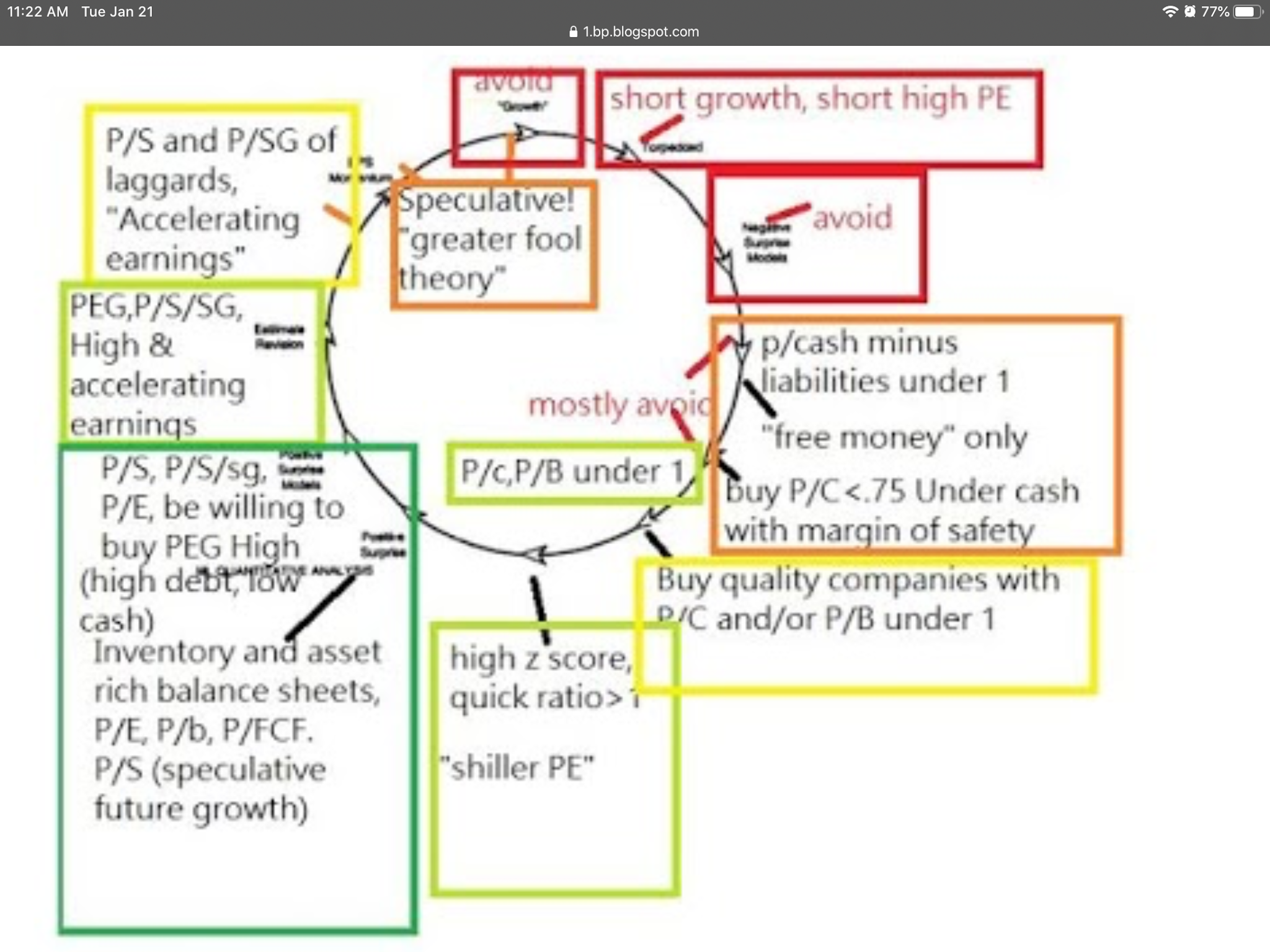
Fundamentals, qualitative, sentiments, cyclical, technicals.
Fundamentals determine what you are buying. What are assets on the book. Fundamentals are compared to the cost. For instance, a company with 2billion in cash, one billion in debts would have book value of 1Billion. If it has a billion shares trading at $1 per share it’s fairly priced. If it is trading at $0.50 per share it is underpriced with a “market cap” of 500M. If it is trading at $2 It is overpriced with market cap of $2 billion. Those assets are tied to what the company is, what it can earn, how it can survive, and whether or not someone is going to come along, buy out the entire company, liquidate the assets, pay off the debts and return the money to shareholders. Additional “intangible” valuation depends on the qualitative.
 Qualitative estimates the intangible value. A good sign of quality business is one that is self funding, that doesn’t need to pile money into factory, plant and equipment just to keep up. A good quality business is one where it has a premium brand, intellectual property protects it, competitors have tried and failed to overtake its status, it has a cultlike following, it creates new products and it creates new customers and expands from local to state to national to global. It has declining costs (what company pays) and increased price (What customers pay), it has high referral rates and word of mouth effect, it has premium products that people will always pay for, it can maintain both a premium brand as well as make alternative economy products to expand customer base with discount option. It has regular income. It bennefits from being the go between of multiple businesses or consumer monopoly or both. These are some hallmarks of quality company.

Sentiment


There are two types of sentiment. Sentiment of the public (those buying stock) and of the forecasters. When everyone buys who is ever going to buy and all capital that ever is going to be allocated is in, the slightest bit of selling pressure or reduction in buying power and cause the stock to decline, particularly if volume is really top heavy. Markets have to top on optomism and overbuying and bottom on Liquidation or pessimism and forced selling.
All sorts of cycles exist in nature that drive human behavior. That’s a bigger topic but people’s mood change based on sun, they gravitate towards food which is governed by the sun, and it’s no surprise solar cycles correlate with recessesions, or why when humans have evolved to become less dependent upon farmland and the sun for food why it may gravitate away from that correlation and towards the debt cycle which is a kind of sentiment cycle of debt and credit. Cycles form by optomism of business participants and earnings forecasts as Well as debt cycle.
When businesses want into a particular market, they have to pay for it. Supply/demand rules the day. When demand to get into an industry is hot, people tend to overpay and overborrow based on promise of returns due to history of growth, that causes overpaying of price, over competitive markets that drive down price and margins and drive up costs and lead to liquidation and declining industry interest which eventually leads to the opposite side of the cycle. Disruptions and fire sales of assets or forced selling due to overleverage requiring sale of assets lead to distressed asset prices which cause others to have insane debt/equity which requires additional forced selling, which eventually rids the market of competition and allows for low price that is precisely what leads to great future returns, converts debt to an asset, expands margins and reverts the cycle until it attracts new set of customers and leads to herding which makes the business competative.

Price of a stock isn’t always directly correlated with value. When credit is tight, and few people are interested in stocks, smart money rules the day and they tend to anticipate some to a lot of this stuff. When the crowd is involved, price becomes king over value, algorithms of smart money feed off the short term movements of price, and market becomes detached from value. That to creates cycles in price as well.


So, cycles is a big part of understanding the market. Not all stocks are cyclical, some are only slightly levered to other cycles like the debt cycle, some are massively levered to the cycle. It’s important to know which one if you are going to use fundamentals, as nearly all fundamentals should be discounted, possibly even to the point of being precisely inverted at particular times. For instance, In 2009 real estate and banks had negative book value precisely at the bottom, the market had worst earnings ever aNd some of the best returns from the bottom were those with the worst possible fundamentals that didn’t go bankrupt. There is a reason for that, the stocks were highly levered to their “extrinsic value” or the potential for assets to move significantly higher as bankruptcy was mostly priced in and assets were eventually to become way more valuable than whatever was on the books, despite peple noticing the opposite trend at the time. The historical earnings that the market eventually reverted to resulted in companies that seemed totally unviable and undesirable at any price to recover and become legitimate businesses that just knocked out most of its smaller competitors who couldn’t make it, allowing them to gobble up market share and their massive levels of debt to small levels of equity to become an asset.

It’s difficult to say just how much the asset prices will “revert” and how far they are from the mean and just how much to discount fundamentals unless you really know the industry and the cycles, but you will be ahead of a lot of people if you focus on distressed industries and consider some margin of safety.
A company’s “book value” discounted to whatever it can be liquidated for at market price determines how much a company is worth “dead”, whereas the ability to convert a small amount of book value into a high amount of earnings and the future earnings power of the company or even the future growth of earnings multiplied by the multiple enthusiastic investors will be willing to pay later is what it is worth “alive”. Extrinsic value may also include things that aren’t obvious, mostly related to quality. Can it innovate products? Can it grow and expand its market? Will It be able to reduce costs over time or increase prices to customers? Or will it be the opposite and costs will increase? Can the company leverage strategic buyouts or joint ventures to immediately multiply its value? For instance, can a conglomerate like Berkshire Hathaway buy a company like Google and use its search engines to reduce advertising costs for its consumer products and increase business of Google at the same time for a win/win relationship?

Technicals have some value, but are more about matching a management style with an entry style. A mean reverting strategy works to the degree you manage your exits so that you have an equal holding period in duration or Roughly equal target and loss levels, or allow for diversification and strategic asset allocation. Alternatively a momentum style can help you manage risk such as using a moving average for an exit plus or minus 2 ATR(2 periods of average movement of the stock) whee you allow winners to run until they run out of momentum and the idea stop workings, the outlier moves pay for the frequent losses.
Aside from that, system based thinking can take market conditions and align them with style.


Some styles do well “in phase” but poorly “out of phase”, others do relatively well in all conditions but tend to do less well in certain conditions, some do well in some phases but not in others. Some relatively trade with the market, others tend to not be impacted by the market. Some trading styles are more effected by volatility (or lack of volatility), trend strength (or lack of), or rotation of capital (or lack of) than price. The best trading system using technicals pair the strategy, the time frame, the allocation/risk, the trading vehicle(s) and the market conditions. Most backtesting fails because they are based on all sorts of details that aren’t repeatable based on a specific kind of market that dominated. If you want to backtest, correlate the conditions (what the signal tells you the market is doing now) with the strategy. You could use a simple mechanism like monthly MACD to determine S&P direction in a bullish crossover (bullish condition) or bearish crossover (bearish) or 50 day Ma Vs 200 day moving average. And other things like volatility index below 15 or above 25 or in between for volatility low, high, or medium. Then you can pair the strategy with the condition and try it again using shorter time frames to see if the signal is as robust. You might test a “mean reversion” concept for the market conditions it works best in with an RSI and then use a different signal when you actually trade it. You are looking for general simplistic concepts to see what works when. When it comes to actual trading it’s more about what you believe and can execute that falls within that concept and aligns with market conditions. It’s hard to backtest “volume profiles” and they are a bit more intuitive/discretionary. But if you plan to trade by buying low end of the range and selling the high or middle during mean reverting markets. or by trading at the middle of the range below a thin volume profile or volume pocket during range expansion or in anticipation of breakout during conditions where momentum trades are likely to stick, you can do that even if you used a MACD or RSI for Backtesting. There was a long period of time where people swore by the 28 day RSI indicator and now that stopped working and the 5 day RSI began working, that may be the result of algorithmic trading scalping momentum in the short term and before that reduction of trading fees (costs) leading to shorter duration trading becoming more viable, or Moe crowd participation and financial network consisting of everyday news and headlines leading to greater short term emotional swings. I’m not sure. But the concept of mean reversion never stopped working and if you chased the backtested performance of the 28 day instead of something you could be effective at in the right conditions, you might have struggled. Moral is, stick to concepts you can personally trade well and backtest only to align conditions with strategy, not curve fit the exact method to use.

Algorithmic trading
Thee ae cheap trading platforms today that can run on “if-then-else” programming logic, “if this indicator is oversold AND these conditions are met, then do this, otherwise don’t”. Such algorithmic trading can allow for crisp precise execution of rules that takes emotion out of the equation. There are a lot of different sound trading logic, but most are some combination of momentum (Growth), reversion (contrarian) and neglect (value). Momentum relies on a few outliers continuing well beyond typical range. (Stocks that go uo 1500% have to go up 100% first) Reversion relies on management to “normalize” the range either over hundreds of trades or fixed holding periods, (Stocks overreact to price movement and then “normalize”) and neglect looks to buy low volatility rangebound stocks at lower end of the range and anticipate a range expansion or “breakout” before the momentum traders. You can also do simple game theory type trading that looks for a portfolio with minimal correlation overall and balance and uses rebalancing/allocation to profit from strong directional capital flows. An example is the “permenant portfolio” of 25% cash, 25% gold, 25% stock, 25% bonds where you adjust if any allocation falls below 15% or above 35%. An algorithmic strategy might rebalance a lot more frequently during range bound volatile conditions and rebalance less frequently during high trend strength and low volatility conditions (that lead to breakouts)


Thursday, March 5, 2020

Inversion of logic

The counterintuitive move at first glance seems to be an inversion of logic but where you can invert logic and find it still might work, you find opportunity. Cyclical stocks are great for this.

Earnings rates cycles with the availability of money. Availability of money can increase or decrease in two different ways. One with the expansion or deflation of credit and the other with the migration of capital into the hands of the consumer. (For instance if money piles into China along with tourism and GDP growth, trade, etc... that will likely make it easier to drive earnings.)

Earnings are driven by activity which can be driven by credit cycles. There may be other types of cycles as well and certainly sentiment will change for both market participants as well as industry insiders and key decision makers. Debt and demand funds expansion but also drives prices higher and eventually can threaten to reduce future returns if you pay a higher price. Over saturation can lead to pricing wars and margin and earnings declines which leads to declining equities and debt consolidation and bankruptcies and deleveraging which eventually limits the growth of assets and gives demand a chance to catch up to declining supply until it can lift again.


The counter intuitive thing goes like this... stocks priced below book values are overpriced until you know the assets on the books and thus the book value will stop going down. Even if book values are negative when it seems like the worst idea, it can be a good time to buy counterintuitively. If you know the assets can increase or the liabilities can decrease, the book value can flip around positive. Book value only tells you what a company is worth if it liquidates at market value. A company capable of earning money is worth more alive than dead so the book value only matters if it can impact future earnings. Earnings can be very negative but if a company is worth more dead than alive and you have the ability to liquidate without losing additional money and return more to shareholders than the market price, you can still find value. Growth will be negative on the downward part of the cycle. You will be best off overpaying for growth if you get opinions early and selling it when growth is cheap if you think growth will continue to decline.

That isn’t to say there isn’t logic to fundamentals... it’s just very tricky and has its reasons.

Markets Have Their Reasons

The markets have to behave in certain ways because of what they are and how humans behave. For instance, deflation might be scary, it might be a reason to sell, BUT it also triggers changes in where capital goes to try to protect itself to mitigate the damage. That eventually creates neglect where even if deflation never turns around there is opportunity and if it does turn around there is greater opportunity so once capital gets cornered into safety, it has to eventually move... some opportunity requires some more creativity than others. For instance, when oil is trading below a certain level (assuming you were managing ridiculous amounts of money) you could take over all companies trading below book value, either sell futures to lock in the value of the book that includes oil prices so if they go down you are hedged and can lock in the value until it resolved, or buy futures plus one company you intend to hold, liquidate the companies entirely except for the one and by doing so reduce the production of oil, have the value returned to shareholders, take physical delivery of the oil and force the price up and then convince a country to build up its national oil reserve so you could sell them the oil or halt production and use the oil you took delivery of to provide the demand... and if you take over a lot of energy companies you can certainly gain control over pricing by massively reducing production and then using up the supply. There are many people who would just hold onto a company with declining book value betting on a turnaround that never develops or betting on liquidation from the others that never happens, and it may even be break even, too small or profit or even negative profit at current oil prices to do so, but the act of doing this with several can actually reduce the increase of supply so that demand is greater than supply and eventually prices must stabilize and then go up. This process could work with many types of companies. If there are 50 ships and 20 shiploads of goods, you can buy out and liquidate, or acquire and shelf and stop creating competition that makes pricing and maintenance unprofitable.

The point is, capital has reasons to do things and this creates new conditions that lead to the next. A market will always act in a way that creates movement.

Capital might believe that there is a vicious cycle where politicians have mandated European a pension funds own 80% bonds and the ECB and fed will continue to ease if things ever get worse, and banks will be more reluctant to lend proportional to the fed’s change in rates as the fed tries to stimulate... so as the fed and central banks lower rates, the spread between borrowers and savers grow, liquidity declines and stocks go up on minimal volume and a risk of a sharp decline when the market gets spooked creates a no bid situation and the fed continues to stimulate by lowering rates, trying QE and doing whatever else. Then they see banks no longer willing to lend to banks at the low overnight rates fed is trying to enforce. So when rates have to go higher and higher and still no one lends, the fed steps in and continues to try to control markets. This process forces them to lower interest rates and stimulate more based on their logic, but since banks aren’t really lending that much more and it drives prices of stocks higher where fewer people are willing to participate, this creates volatility risk that moves people into bonds in anticipation that the central banks will always support it. In addition, people looking at the trend of lower and lower rates and talk of “negative rates” don’t really want to borrow if they think they will make more money by waiting in 6 months and seeing if the rates go down or they may wait if the fed cuts by half a percent and the actual rates haven’t gone down by an equal or greater amount. At any rate this cycle can’t necessarily continue forever as interest rates in Europe are already negative. While traditional models have been abandoned by parking money in bonds and waiting for fed to drive up the price and down the yield because that’s what accommodative policy does, this has created risk parody that isn’t proportional as you would expect.

Normally it might look like this: (image from Howard Marx The Most Important Thing)


But as rates offer lower and lower yield, other assets get more and more attractive by comparison and they have been neglected with the decline of global liquidity.

Ironically, it’s deflation due to China totally halting their economy to fight the corona virus that may actually cause stocks to go up if it eventually breaks the European economy. If we deflate further, that inflicts more pain on the economy and those who currently have experienced significant austerity like Germany may revolt at some point or they will have to steal even more from pension funds which could also cause riots, or they will have to steal from all bond holders or people with money. Brexit likely will not be the last country to leave and for them to turn to a marxist approach would only cause additional deflation that would break their economy even more. it may take a final breaking of the european economy to send money out, and the safest place in theory is still US bonds.

However, S&P stocks now yield close to twice as much and additional deflation would push that number above 2. So if you have to park your money do you keep it in something where you can only ever get under 1% tying it up for 10 years and if the government goes bankrupt you get nothing with risks of them forcing you to take a “haircut” (robbing from bond holders) or do you put it in something where you have legal rights to access book value in worse case scenario plus earnings in excess of dividends, plus potential for growth and potential to benefit from price appreciation due to movement of capital into stocks?

So deflation exacerbates the opportunity and may actually trigger the move. Markets always have their reasons, even if they are nuanced and tricky...

Let’s take for instance why value may invert. When credit is in excess, money is moving around and particularly when capital is heavily concentrated into that part of the world and tourism is high and money is coming in, a companies earnings will be inflated, so even if P/E is reasonable, it could still be overpriced. When markets sell off because of an event and/or credit crunch, the earnings are an unknown.

And yet if money has totally moved out, credit has totally deflated, Business activity and trade have halted earnings can be minimal or negative so any price wouldn’t seem justified and yet it might be the best time to buy and there may be the most value out there if earnings revert to historical levels.

Using Shiller PE can help somewhat as the average of the last 10 years of earnings might have some significance but its not always representative of a cycle average and even so, there isn’t any particular level of Shiller PE that you can definitely say is too high and will signal a bottom or too low.

What would the appropriate Shiller PE be if costs of goods approaches zero and excess capital available for the investment class only rises over time? More excess money equals more money to invest and that means higher valuations. There are only so many ways you can spend money in a great economy, investing should be a growing percentage over time and Shiller PE must rise.

The market can be complex, and it may even drive itself to and from extremes from one to the other, but it always has its reasons. I say this because it’s useful to understand things like how deflation would make materials and oil and such even cheaper and at some point an activist buying up multiple companies to reduce production and pricing competition might accelerate the turnaround or else companies can go bankrupt and are forced to liquidate or have their assets sold in bankruptcy courts.

It may seem at the time like when bankruptcies force assets to be sold for pennies on the dollar that it would also put equities lower and debt to equity higher and force others into action and additional bankruptcies. But eventually the gravity that pulled it downward pulls it around and back up. The decreased production and decreases amount of assets in the industry influences prices to go up.

So a real estate company may have vacancies and depressed earnings at depressed prices, when the normalized rent yields when the property isn’t vacant is very high relative to price at the same time its book value goes negative and it is at the highest risk of bankruptcy. The relationship between value and price over time can only be understood when you understand how it can be very counterintuitive most of the time and when you can also find an edge the market doesn’t recognize or can’t capitalize off of or else it wouldn’t be there to trade.

Markets have their reasons.

Saturday, February 15, 2020

Highs vs low


On the right is % of stocks in the industry within 5% of the 52 week low
On the left is the percentage of stocks within 5% of the 52 week high.

I use this scan to find distressed industries to scan from for setups.